Stainless Steel Rings — Hypoallergenic Stackable Set | Stylr
Rings sized to live on your hand, not in a box. Stylr's rings — stacking bands, signet rings, statement cocktail pieces — are made from 316L surgical stainless steel, finished with PVD color coating or 18K gold-plating. They're the same material used in surgical implants, which means they don't tarnish, don't react with sweat, and don't need to come off when you wash dishes.
Why the metal matters more than the price
Most $20–60 rings on the market are brass with thin electroplating that wears through in 4–8 weeks of daily wear, leaving green or gray skin marks. 316L stainless steel doesn't have that failure mode — there's no reactive layer underneath the finish to expose. PVD color is bonded under vacuum, not dipped, so it survives showers, gym sessions, hand sanitizer, and accidental dish soap.
How to find your ring size at home
Wrap a strip of paper around the base of the finger you'll wear the ring on, mark where it overlaps, then measure the length in millimeters and match against our ring size chart. Measure at the end of the day, when fingers are at their largest. Order half a size up if you're between sizes — knuckle clearance matters more than tightness at the base.
Stacking that actually works
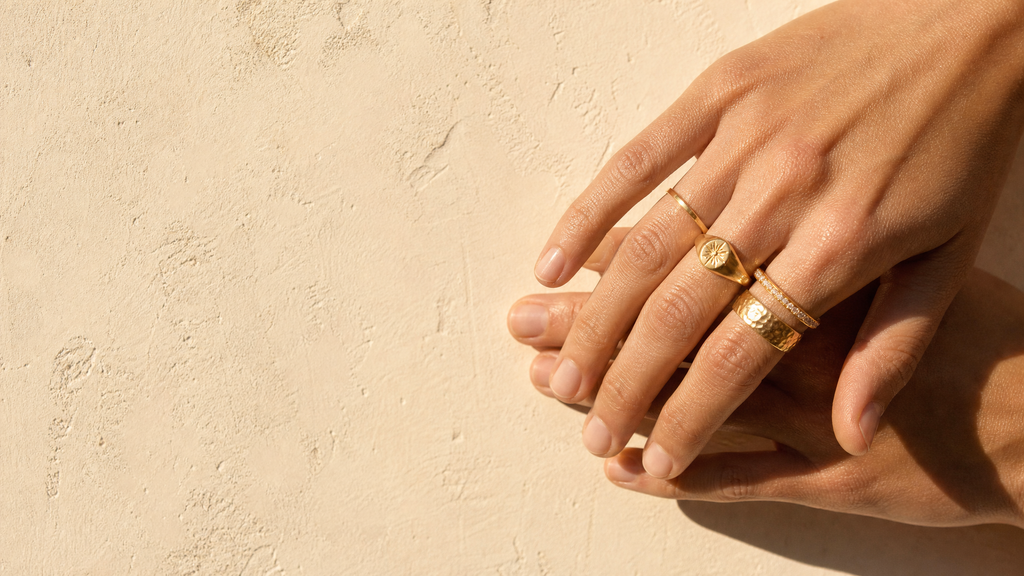
Three thin bands beat one chunky one for daily wear. Pair a plain band with a textured band and a thin signet — varied texture keeps it from looking like a single thick ring. Mix gold and silver-tone deliberately: one accent metal against two of the other reads styled; equal halves reads indecisive.
Common questions
Will the color wear off? Not within the 1-year warranty period under normal wear. PVD on stainless is structurally different from electroplating. Sizing too big or small? No-Return-Needed Resolution — keep the original, we'll send the right size. Can I shower with my ring? Yes. Soap residue can dull shine over weeks; rinse and air-dry to keep it sharp. Are these nickel-free? 316L contains 10–14% nickel locked inside the alloy — non-reactive at the surface, which is what hypoallergenic actually means in metallurgy. We don't claim "nickel-free" because that's chemically inaccurate.